Market
Memos from Howard Marks: Is it a Bubble?Market / General
Brookfield 2026 Investment Outlook
Brookfield explores the key trends and compelling opportunities shaping this defining moment for private markets. With a message from CEO Bruce Flatt and perspectives from our business group leaders, we analyze the opportunities we see in the year ahead. Read our 2026 Investment Outlook special report.
12.18.2025
Message from Brookfield CEO, Bruce Flatt
Owning change in a transforming world
Private markets continue to grow as investors recognize the role that private assets can play to help them meet their long-term goals. Investors increasingly understand that essential infrastructure, renewable energy, real estate and other real-asset businesses offer enduring value through stability, inflation resilience and compounding growth.
Today, the long-term opportunities for private capital lie in the megatrends we call the Three Ds: digitalization, deglobalization and decarbonization. These are not temporary cycles—they are structural transformations that are reshaping economies and driving investment for decades to come. As these themes accelerate, owning and building the real assets that form the backbone of the global economy will continue to be the key to building resilient, compounding portfolios.
While today's market, like all periods in history, requires navigating pockets of short-term uncertainty, market conditions are favorable for large-scale alternative investment activity. Global M&A volumes reached multiyear highs in 2025, while stabilizing interest rates and the resilience of the global economy reinforce the case for investing in high-quality, long-duration assets that generate steady cash flows and attractive risk-adjusted returns.
Across our businesses, a consistent theme is emerging, and it is one we have adhered to for decades: disciplined transformation. Today's investment environment rewards operational excellence, efficient capital recycling and a renewed focus on fundamentals.
In infrastructure and energy, investment is accelerating to meet the world’s rising demand for power— unlocking opportunities for investors like us with the scale and insight to deliver. Global real estate's winners will combine investment skills with operational expertise, while in private equity, value creation now depends more on transforming companies and less on financial engineering to deliver returns.
And finally, credit markets are rewarding those with underwriting standards focused on asset quality.
Resilience has always been at the core of Brookfield’s approach. Patient, disciplined capital—deployed into the real assets that power progress—will continue to create enduring value for our investors and partners.
That conviction has guided us for decades, and it will continue to do so in 2026 and beyond.
Infrastructure - Accelerating Growth, Embedded Resilience
Key Themes for 2026
- The infrastructure supercycle continues, fueled by the converging megatrends of digitalization, decarbonization and deglobalization— structural forces whose foundations have only strengthened.
- Artificial intelligence and data sovereignty are driving explosive demand for digital infrastructure and compute capacity, which has had a domino effect in driving the needs for power and supporting infrastructure.
- With rising institutional allocations to real assets, the sector stands at the center of the world’s largest investment cycle.
As we look toward 2026, the outlook for infrastructure is stronger than ever. The sector has delivered stable and growing results through every market cycle for decades, and it now stands at the intersection of powerful global forces - digitalization, decarbonization and deglobalization. Each is accelerating a structural investment cycle that is expanding in both scope and scale as institutional allocations to the asset class rise, providing the funding that will build out the backbone of the global economy.
An Infrastructure Supercycle
Global infrastructure investment needs are expected to exceed $100 trillion by 2040,¹ as the definition of infrastructure expands beyond traditional power and transport systems into the digital and industrial ecosystems that will underpin the next era of global productivity.
Transaction activity has increased in 2025, and we expect that momentum to continue into 2026. At the same time, many assets—from regulated utilities to contracted digital networks—benefit from inflation-indexed revenue streams that preserve real returns and continue to attract investor capital.
The AI Revolution
AI is emerging as the next transformative general- purpose technology, much like electricity or the internet before it. Its impact will span all sectors of the economy and demand unprecedented levels of supporting infrastructure. Artificial general intelligence could unlock as much as $10 trillion in productivity gains over the next decade, but will require $7 trillion of infrastructure investment across the AI value chain² to realize its potential. This includes opportunities in data centers—or “AI factories”— dedicated power generation, compute infrastructure such as GPUs, and strategic adjacencies like semiconductor manufacturing and fiber networks.
The advent of AI has created a step change in infra- structure growth, with demand for data centers, fiber networks and electric utility grids far exceeding initial expectations.
Digital infrastructure is capital intensive by nature. Building a hyperscale data center requires over $10 million per megawatt, while the compute infrastructure within it can exceed $30 million per mega- watt—driven by chip requirements.
Despite global hyperscale capital expenditure projected to rise 50% between 2024 and 2025 (see Figure 1), more is required. AI workloads now consume up to 10 times more power per rack than conventional compute, with expectations of another five-to-tenfold increase as rack density increases.³ With sovereign governments facing record debt levels and large tech firms seeking to team with well- capitalized partners, there is a tremendous opportunity to formulate innovative capital partnerships to meet these capital needs and deliver the essential infrastructure to meet demand.
Rewiring Supply Chains
Parallel to these technological shifts, deglobalization is redrawing the geography of economic activity. What began as a movement to reshore strategic industries has evolved into a systemic restructuring of energy, manufacturing and logistics ecosystems. Governments and corporates alike are prioritizing supply chain resilience, energy security and techno- logical sovereignty. In the U.S. and Western Europe, industrial policies are accelerating the repatriation of semiconductor, pharmaceutical and advanced manufacturing capacity, supported by trillions of dollars of public and private capital.
As a result, long-term investors with scale capital are uniquely positioned to capture the most attractive opportunities centered on the reshoring of critical and advanced manufacturing platforms, structured through long-term, infrastructure-style contracts that provide stable returns. This includes semiconductor fabrication, battery and robotics manufacturing, and other sectors underpinning technological sovereignty.
The opportunity extends across full supply chains— encompassing specialized processing, logistics, midstream and energy inputs, and industrial sites linked to AI and reindustrialization. The U.S. remains the deepest near-term market, followed by Western Europe and select Asia-Pacific economies. In each region, large-scale partnerships with corporates and sovereigns are becoming the preferred model to deliver capital efficiently and at speed.
Image

Figure 1: Hyperscaler Capex Soars as Chips Require More Power
Source: Actual 2024 and forecasted 2025 annual capital expenditures for six hyperscale companies, based on publicly available disclosures; IoT Analytics, November 2025; Nvidia, as of August 2025.
Meeting Power Needs
The rise of AI and electrification is intensifying the need to generate and transport energy. Electricity demand is climbing sharply across all regions, driven by both digitalization and the onshoring of manufacturing, while existing transmission infrastructure struggles to keep pace.
More than 70% of global transmission lines are over 25 years old, with interconnection queues for new renewable projects stretching close to a decade.⁴ Analysts estimate that annual grid investment will need to exceed $600 billion by 2030 to replace aging assets,⁵ integrate renewable generation and ensure reliability. Hence, the need to “de-bottleneck” the grid has become a defining investment theme, creating opportunities for large-scale partnerships and private capital solutions across the energy value chain.
We are finding that the strongest opportunities lie in grid modernization and transmission upgrades to relieve interconnection backlogs, alongside utility-led capex programs that offer regulated, inflation-linked returns. An “any-and-all” approach to baseload generation—combining natural gas and nuclear with onshore wind, solar and storage—will be vital to meeting reliability needs. At the same time, behind-the-meter generation for data centers and industrial users is emerging as a key enabler, shortening time-to-power and bypassing grid bottlenecks while linking directly to the digital infra- structure buildout.
AI is accelerating the need for data centers, fiber networks and modern power infrastructure—creating an entirely new class of investment opportunities.
Sam Pollock
CEO, Infrastructure
Resilient Performance
Independent of geopolitical or macroeconomic uncertainty, infrastructure investments are inherently built to weather market cycles. The sector’s resilience stems from its core characteristics: perpetual, long-lived assets with high barriers to entry; contracted or regulated revenue streams that are typically indexed to inflation; and stable, predictable cash yields with low correlation to public markets.
These structural features provide inflation protection and steady performance across environments. While short-term frictions may arise, they do not alter the fundamental trajectory of growth. The essential and enduring nature of infrastructure underpins its strength through periods of cyclical volatility.
Image
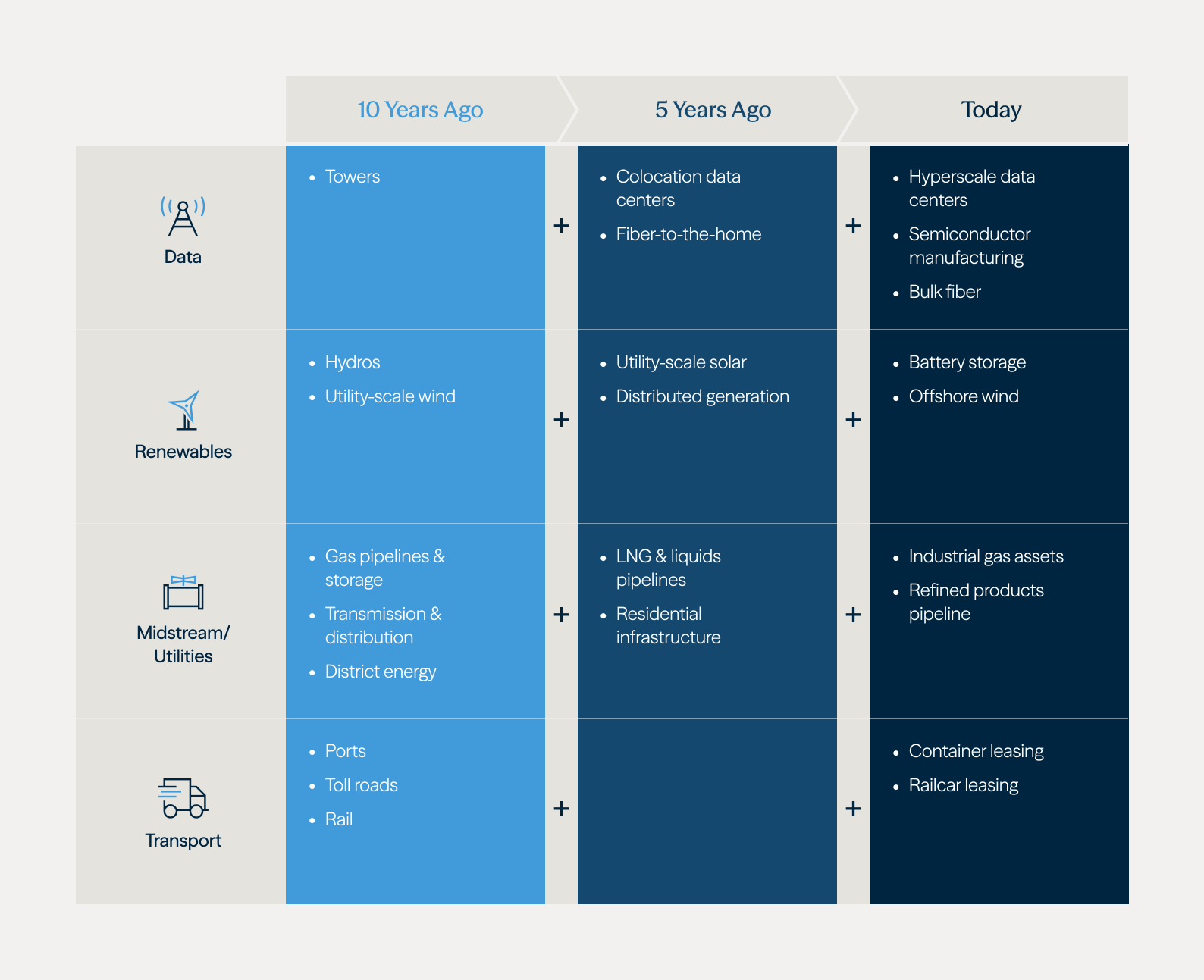
Figure 2: The Evolving Infrastructure Opportunity Set
Building for Global Growth
We believe that supportive financial conditions and accelerating secular themes are positioning the global infrastructure sector for enduring growth. The AI buildout cannot occur without clean, reliable power, grid modernization cannot proceed without private capital, and the reindustrialization of economies cannot succeed without the digital and energy infrastructure to support it. This convergence is creating a once-in-a-generation opportunity for disciplined, long-term investors to fund the physical backbone of the global economy’s next phase (see Figure 2).
Across the power, data and manufacturing eco- systems, the scale of required capital far exceeds what corporates and sovereigns can fund alone. This dynamic is driving a wave of large-scale partnerships, joint ventures and privatizations, as governments and hyperscalers seek off-balance-sheet solutions. These collaborations are enabling the rapid delivery of essential infrastructure—from sovereign compute facilities and AI ecosystems to behind-the-meter generation and next-generation manufacturing capacity.
Taken together, the sector’s resilience, rising allocations and deepening strategic relevance underscore an outlook that has rarely been more constructive. As we enter 2026, it’s clear that the Three Ds are no longer separate megatrends, they are the converging foundation of global growth, defining the opportunity set for the decade ahead.
Renewable Power & Transition Scaling power to meet relentless demand
Key Themes for 2026
- Global electricity demand is accelerating faster than supply, propelled by the combined forces of digitalization, electrification and industrialization.
- Electricity is the bottleneck for global growth and therefore a strategic imperative. Corporates and governments are increasingly prioritizing energy security and domestic supply, reinforcing investment in renewables, nuclear and gas, alongside upgrades to grid infrastructure.
- No single technology can meet future load needs alone. Meeting this unprecedented rise in demand needs an “any-and-all” approach, with a focus on: renewables—the lowest cost source of bulk power in most regions of the world—for its economic advantage and speed; battery storage for flexibility; nuclear for scale and reliability; and natural gas for stability. Scaling these technologies in tandem will require significant investment over the next decade and beyond.
In a few short years, power has become a strategic priority around the world. It is now the bottleneck to growth for both governments and corporates.
Energy will define economic development in the years ahead. It is the most significant gating requirement for nearly every major economic opportunity we have today, from manufacturing to artificial intelligence. AI’s promise of transformational productivity gains across almost every part of the economy is further pushing energy to the center of national and corporate competitiveness. Without sufficient power, those gains and future growth and competitiveness are at risk.
Renewable energy costs have fallen dramatically, leading to a rapid buildout of wind, solar and batteries—yet global power systems are still struggling to keep pace with surging demand. Gas represents an important part of the solution in most countries, although growth is similarly constrained by resource limitations and lack of necessary infrastructure. As a result, many countries are looking to nuclear as another source of stable power to meet load growth.
Fundamentally, we have all the technologies we need to meet increasing power demand. The constraint today is scaling investment and development fast enough to meet this demand—creating an environment where players with the right mix of capabilities and access to capital are positioned to generate significant value.
Fundamentally, we have all the technologies we need to meet increasing power demand. The constraint today is scaling investment and development fast enough to meet this demand.
Connor Teskey
CEO, Renewable Power & Transition
While our 2026 view is anchored in the same fundamentals that defined last year’s outlook, the investment landscape has evolved in important ways. Demand is accelerating, increasing the opportunity for those that can provide scale energy solutions to global grids, with cost, speed to market and energy security being the key priorities when investing in new energy capacity.
Image
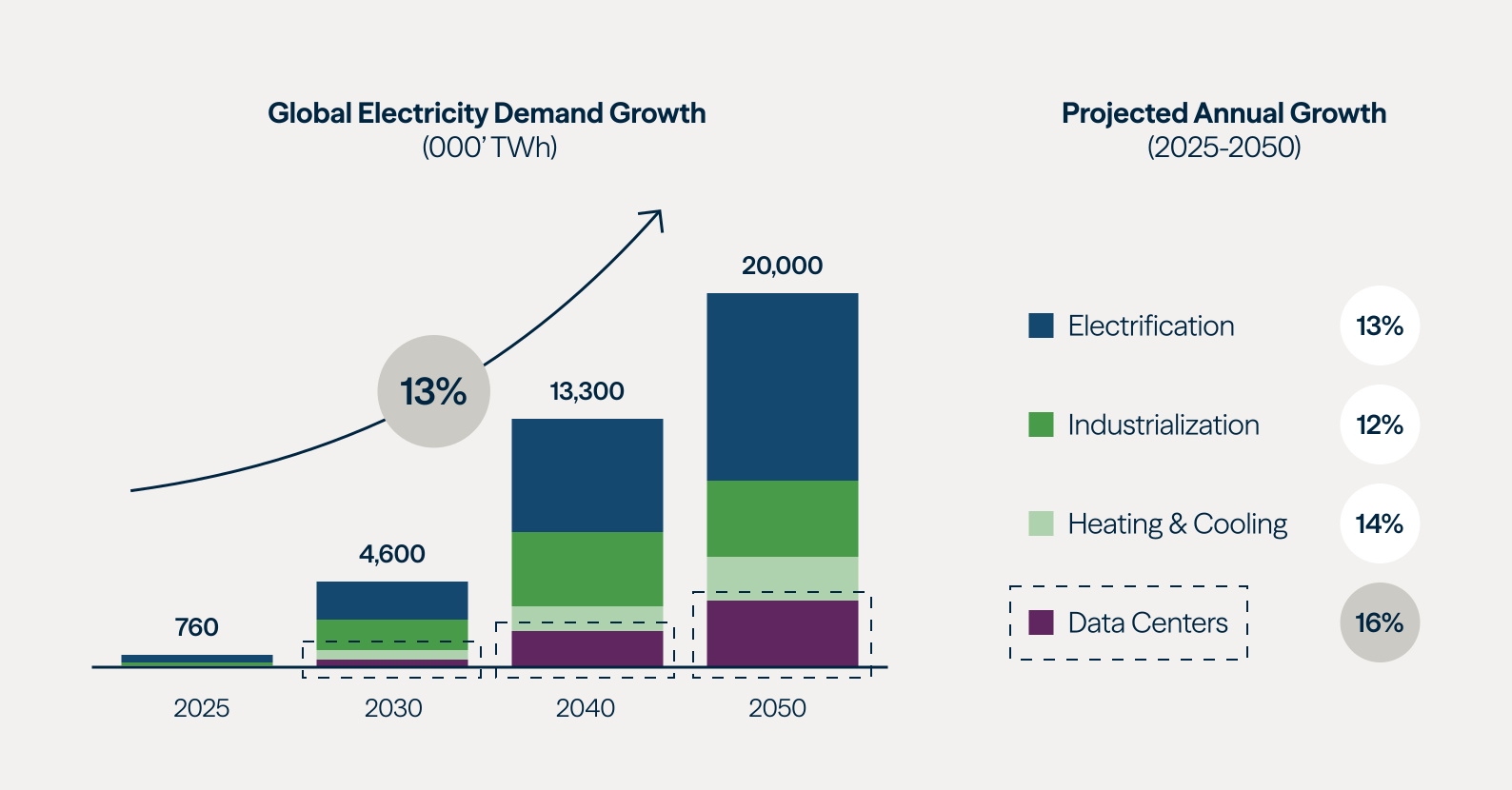
Figure 3: Data Centers Are the Fastest-Growing Demand Driver
Source: BloombergNEF
Reflecting the world’s need for “any-and-all” energy solutions, global power investment is expected to reach $3.3 trillion in 2025, with over 60% directed toward renewables, storage and grid optimization.⁶
Energy Is a Clear Strategic Priority
Energy demand is shaped by three powerful forces: deglobalization, as nations pursue energy independence; digitalization, as AI and data storage increase demand for reliable power; and decarbonization, as industries electrify and invest for sustainable growth. Each is accelerating towards the same outcome: delivering low-cost, reliable and scale energy, faster than ever before.
To achieve growth and partake in the evolving economy, governments and corporates are onshoring critical supply chains and investing significantly in domestic energy sources. In particular, economic drivers are reinforcing investment in low-carbon energy systems because they deliver the most affordable and secure power. The world’s largest corporations are seeking to procure low-cost, quick-to-market and scalable power to ensure their competitiveness and continue to partner with energy suppliers directly, reducing reliance on grids and utilities as intermediaries. We expect this dynamic to continue in 2026 and well into the next decade.
Four hyperscalers—Amazon, Google, Microsoft and Meta—now account for nearly 90% of global clean energy contracting for data centers.
Connor Teskey
CEO, Renewable Power & Transition
Hungry for Power
The most significant development of the past few years is the surge in electricity demand driven by digitalization and the rapid adoption of AI.
The data center buildout is the fastest growing source of electricity demand and will transform global power needs (see Figure 3). The forecasts struggle to keep up: BloombergNEF now projects
U.S. data center power demand to reach 106 GW by 2035, a 36% jump from its forecast just seven months before.⁷ Four hyperscalers—Amazon, Google, Microsoft and Meta—now account for around 90% of global clean energy contracting for data centers.⁸ At Brookfield, we have seen our contracting to these businesses double in less than two years and expect electricity demand forecasts to keep rising.
And while data centers are the fastest-growing source of demand, broad-based electrification and industrialization are the largest volume drivers, at over 70% of demand growth until 2050.⁹ The reindustrialization of the world’s largest economies, the electrification of major sectors—such as industrials and transportation—and the urbanization across emerging markets are creating sustained demand growth for generation capacity that will last for decades to come.
The need for power is particularly acute in the emerging markets. These economies are industrializing at an unprecedented pace, and energy security has become a national imperative. Despite the fact that emerging markets (outside China) are seeing some of the fastest growth in electricity demand, today they only receive an estimated 20% of total annual investment in the power sector.¹⁰ Here, the cost advantage of renewables provides a durable foundation for growth independent of subsidies or short-term policy shifts.
“Any-and-All” Solutions
Corporates and governments are now converging around the same objective: securing affordable, clean and reliable power at scale and quickly. Only a diverse, “any-and-all” energy solution—scaled with private investment—can power the global economy in the years ahead.
Renewables lead on cost and speed
Renewables remain the lowest-cost source of new electricity and the fastest to deploy and scale. Solar and wind projects anchor new-build pipelines, sup- ported by long-term, inflation-linked corporate and utility offtake agreements.
We believe renewables will continue to represent the largest share of new capacity additions in 2026 and beyond. The International Energy Agency (IEA) forecasts solar and wind to provide almost 20% of global electricity by 2026, a nearly fivefold increase from a decade ago.¹¹ Between now and 2030, it expects renewable power capacity to double.
Recent headlines suggest a potential slowdown for renewable investment, driven by changing policy priorities; in reality, the fundamental advantages of these technologies—and energy demand growth from corporates—are driving increasing investment, with no sign of abating. In fact, that dynamic is most significant in the U.S., where we are seeing the greatest ever demand for renewables despite recent policy changes.
Some projects and businesses have been affected by changing U.S. policy over the past year. But for those like Brookfield with a disciplined approach, access to scale capital and high-quality projects, the opportunity is growing. Many of the largest and most capable businesses have safe-harbored projects securing tax credits through to the end of the decade, maintaining underwritten returns. Even when these credits are phased out, renewable technologies will continue to stand on their own given their economic advantages: speed to market and energy security.
Storage enables round-the-clock clean power
Batteries are now central to meeting energy demand as they transform wind and solar into round-the- clock power solutions and provide increased reliability. Costs fell by roughly 95% since 2016,¹² enabling large-scale deployment alongside renewables and traditional thermal technologies.
In addition to enabling the supply of 24/7 clean energy, batteries provide critical grid stabilizing services when growing loads and a shifting energy mix have resulted in congestion and intermittency. We expect investment in grid-connected storage to continue to increase in 2026 as a solution to these challenges and, in particular, note that colocated solar-plus-storage developments are emerging as a preferred model for new capacity. In the U.S., over half of the utility-scale storage coming online by 2026 is paired with solar.¹³
By 2030, global demand for batteries is now expected to be double what anyone thought possible just a few years ago, reflecting the improving economics and evolving needs of the grid (see Figure 4).
Nuclear returns to the mainstream
Nuclear energy is a critical source of scale, carbon-free baseload power, and governments around the world are increasingly looking to it as they form their energy strategies and policies. The U.S. government has made it a strategic priority to start construction on 10 new reactors by 2030¹⁴ and recently announced it would invest a minimum of $80 billion to kickstart this program with Westinghouse—a nuclear technology leader owned by Brookfield since 2017. The U.K., Poland, Czechia and Bulgaria, to name a few, are building new reactors, and around the world countries are extending the life of their currently operating fleet and restarting non-operational reactors. This renewed focus is, in turn, driving supportive regulation and improved capital access, which is expected to continue reviving investment interest.
Our view is that over the coming decades, hundreds of gigawatts of new nuclear capacity will need to be deployed. Through Westinghouse, we are witnessing a step change in the nuclear reactor buildout that exceeds anything seen this century, creating investment opportunities not only in the construction of new generating plants, but also in securing the decades-long fuel and servicing requirements for those reactors.
Image
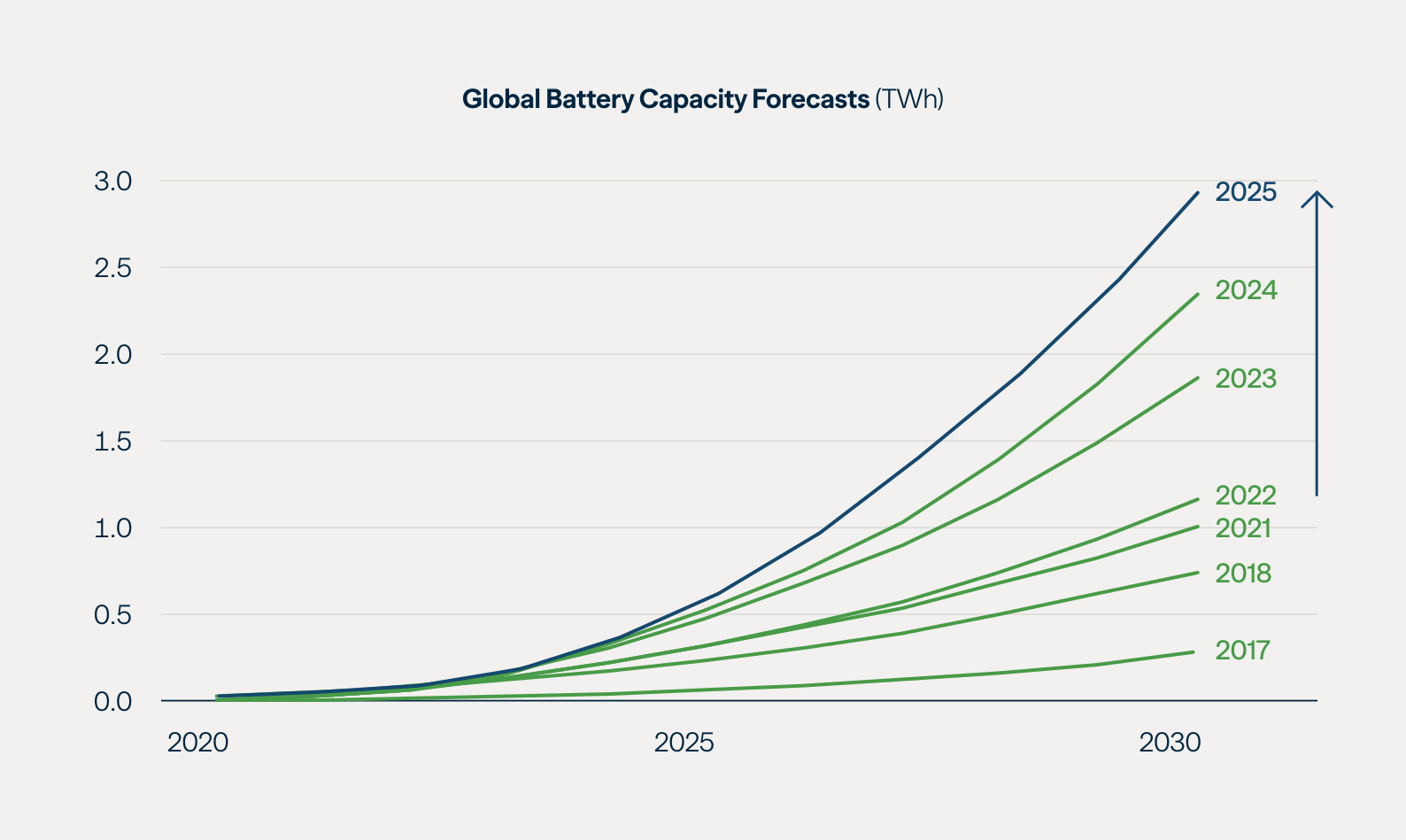
Figure 4: Batteries Have Become the Cornerstone of Power Systems
Source: BloombergNEF.
Gas + carbon capture as critical balancers
Natural gas continues to play a critical role in meeting energy demand and stabilizing grids. While we see vast demands for power driving a resurgence of nuclear, we are observing similar trends in gas, especially in markets that have an abundance of this natural resource domestically.
What’s more, carbon capture and storage (CCS) is increasingly economic and can be paired with gas to provide cleaner, more reliable and flexible energy solutions. Projects such as Entropy’s Glacier CCS facility, the world’s first decarbonized gas plant through carbon capture,¹⁵ further demonstrate commercial viability of CCS and help solidify the position of natural gas as a transitional yet indispensable power source.
Other decarbonization technologies expand the toolkit
Beyond power generation, a new wave of decarbonization technologies is emerging for sectors that are difficult to electrify. eFuels—including sustainable aviation fuel and other biofuels produced from captured carbon dioxide and green hydrogen—offer pathways to cut emissions from aviation, shipping and long-haul transport. Brookfield’s investment in an eFuels project with Infinium—supplying low-car- bon fuel to airlines and logistics customers— demonstrates how these solutions are moving to commercial scale. Green hydrogen and advanced recycling technologies are also helping heavy industry reduce emissions where high temperature heat and complex feedstocks are involved. Together, these technologies complement renewables and storage and expand the toolkit for decarbonizing hard-to-abate sectors.
Managing grid limitations
Utilities and grid operators are planning significant levels of transmission investment. In 2024 alone, a record $390 billion was invested to ensure that grids could manage additional power.¹⁶ However, we expect grid connection to remain one of the biggest obstacles to meeting demand. This should contribute to continued growth in batteries, which reduce grid congestion, and distributed generation, which can add capacity without relying on the grid.
Looking Ahead
The future needs an “any-and-all” approach to energy investment. The forecast demand is too high, and the existing technologies too established, for there to be a zero-sum or winner-takes-all out- come. Investors who work with governments and corporates to deliver diversified energy solutions are poised to best capitalize on this dynamic.
Disciplined capital allocation is increasingly import- ant, as generating returns in such an environment requires adherence to the same rules that define success in other forms of infrastructure investing— focusing on securing long-term contracts backed by creditworthy counterparties and delivering technologies that stand to win on the fundamentals. Similar to previous growth periods, as policy incentives normalize and competition intensifies, those attributes will separate durable value creation from cyclical growth.
In this environment, we see an opportunity for disciplined and experienced operators to capture significant value by enabling the largest energy buildout in history.
Private Equity - Resilience, reset and resurgence
Key Themes for 2026
- Deal activity is accelerating, fueled by normalizing interest rates, attractive asset values in aging portfolios and corporate rationalizations.
- Consolidation is anticipated as the industry resets after a rapid expansion, with opportunities flowing primarily to managers with scale and operational discipline.
- Industrial companies requiring operational transformation offer great opportunity as deglobalization and digitalization—led by the artificial intelligence revolution—drive necessary productivity improvements.
Tailwinds and megatrends are energizing the industry after a challenging period. To us, the year ahead can be summed up in three words: resilience, reset and resurgence. In this new era, operational expertise is the dominant driver of returns.
Resilience
Private market deal activity is rebounding, with a noticeable recovery in buyout volumes seen through the first half of 2025 despite temporary tariff disruptions in the second quarter (see Figure 5). While deal values reached a peak in 2021–22 before dipping significantly, they are now back to more normalized levels and exceed values from 2018–19.
After expanding for a decade, private market trans- action multiples have remained relatively flat for the past five years but have yet to show real capitulation. The industry as a whole has struggled with monetizing assets in recent years: Nearly one-third of all buyout capital is four or more years old, while the unrealized value of portfolios has climbed toward $3.5 trillion globally.
Image
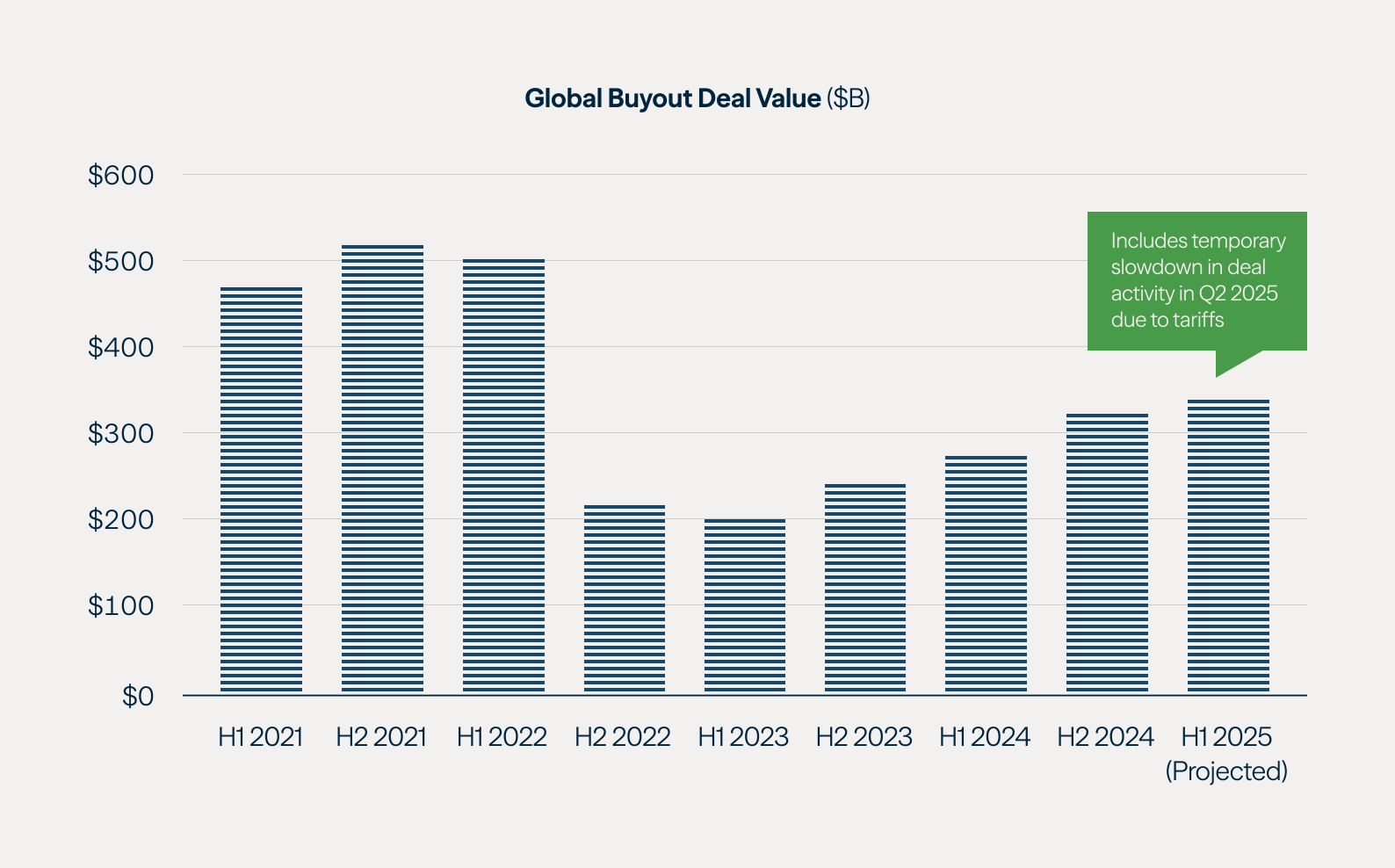
Figure 5: Deal Value Is Rebounding in Private Markets
Source: Bain & Company, “Private Equity Midyear Report 2025,” June 2025.
This dynamic, along with additional potential rate cuts in the U.S. and Europe, points to higher deal activity in 2026. Portfolios can age for only so long before they must transact.
Reset
Over the past decade, the private equity industry grew rapidly as managers used low-cost debt to buy assets and then benefited from market growth and expanding multiples to drive returns with limited margin improvements. This was an unsustainable trend. Many managers that purchased assets at elevated valuations several years ago are stuck holding businesses that now are worth less than what they paid, creating a supply of quality assets available at potential discounts.
The market is recalibrating after a decade of general partner proliferation. The number of firms has tripled relative to capital raised, creating a 3:1 imbalance between fundraising targets and available investor capital.
In 2026, we see the industry beginning to reset, with the most scaled and operationally disciplined players thriving in an era of consolidation. We expect the next 24 to 36 months to mark the steepest phase of this consolidation, particularly among mid-market general partners with differentiated operating capabilities. As the industry shrinks, these capabilities will become the currency of survival, and the managers positioned to benefit most will share four traits:
- Scale to execute complex transactions
- Sector expertise for an informational edge
- Operating capabilities to drive post- acquisition value
- A focused, controllable thesis anchored in tangible performance levers
The new era is forcing managers to work harder and focus on margin expansion—not multiple expansion—to earn their returns. Brookfield Private Equity has historically employed this approach, with operational improvements accounting for over 50% of total value created.¹⁹
The math is unforgiving for managers continuing to rely on cheap leverage. For example, a trans- action with a 5% interest rate and a 70% loan-to- value ratio would require 4%–5% earnings growth to generate a 20% internal rate of return. But with today’s higher rates, a transaction with a 7.5% rate and 55% LTV ratio would require nearly twice the earnings growth—8.4%—to achieve the same 20% return.
Public market volatility is driving industrial management teams to pursue privatizing assets, recognizing that meaningful change requires a long-term outlook rather than quarter- over-quarter earnings scrutiny.
Anuj Ranjan
CEO, Private Equity
In the new era of private equity investing, marginal deals that require financial engineering will underperform. Operational excellence is the new driver of returns.
Image
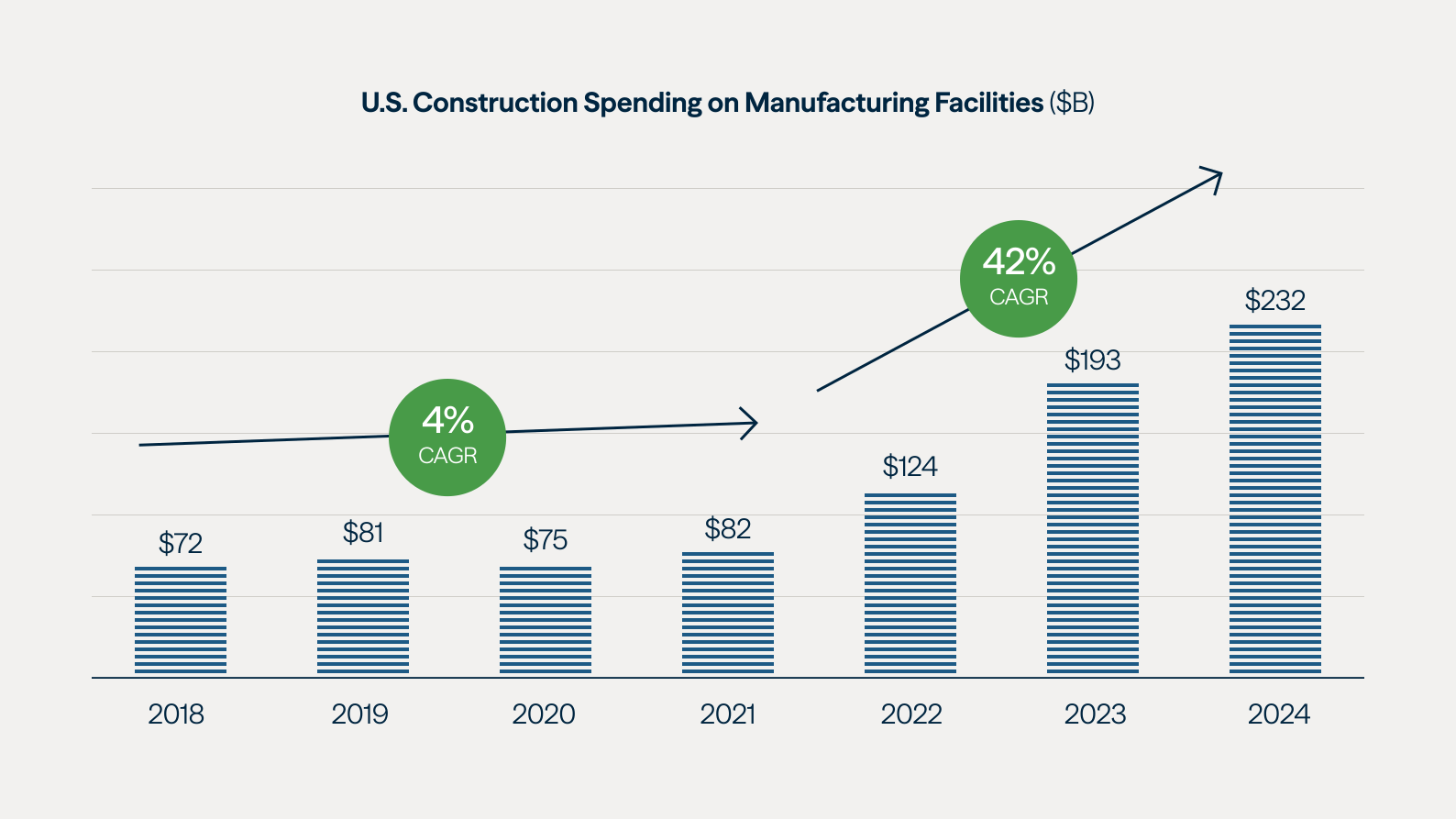
Figure 6: Deglobalization Is Delivering Rapid Growth in the U.S.
Source: PwC, "Strategy & Project Keystone Phase II: U.S. Manufacturing Activity Outlook," February 2025.
Resurgence - Industrial transformation
Sometimes compelling investment opportunities can hide in plain sight. Industrial companies are often overlooked and undervalued, not because their products are obsolete but because many have underinvested in modernization, capacity and operational capabilities. This leaves them less competitive despite strong underlying assets and market positions.
Private capital is increasingly required to transform these companies. Public market volatility is driving industrial management teams to pursue privatizing assets, recognizing that meaningful change requires a long-term outlook rather than quarter-over-quarter earnings scrutiny. Many large-scale conglomerates are rationalizing their noncore businesses, creating attractive buying opportunities for managers able to tackle complexity and drive change.
Beyond internal business strategies and pressure from outside investors, two unfolding global megatrends will drive this transformation in 2026—and likely for decades more.
The backbone of the global economy requires supply-chain resilience. Yet events in recent years— Covid, geopolitical tensions and tariffs—have prompted industrial companies to seriously consider reshoring their essential manufacturing processes to avoid massive cost increases and disruption. This trend toward deglobalization offers private equity firms opportunities to provide the deep expertise and significant capital required to secure industrial company supply chains (see Figure 6).
AI-led digitalization is the other megatrend reshaping businesses across the globe. For industrials, implementation is imperative. Unlike many pure technology companies, industrials often operate with legacy infrastructure, analog workflows and decentralized decision-making that add complexity to modernization efforts.
In our view, AI models will increasingly play an out- sized role in transforming industrials, cutting costs, addressing labor shortages, innovating product lines and optimizing supply chains. This is not a plug-and-play exercise. It demands operational expertise, deep sector knowledge and the ability to redefine how work gets done.
Beyond the industrials sector, AI is creating opportunities in essential business services. In financial services, for example, AI is enhancing efficiency by automating underwriting, improving loss forecasting, and enhancing fraud detection and prevention. In financial infrastructure, banking platforms must transform their analog systems into new-age digital operations to remain competitive.
Productivity potential
AI is poised to become the most impactful general-purpose technology in history, driven by the expected buildout of the necessary capital-intensive physical infrastructure to support its adoption and the efficiencies that result.
We anticipate that AI-led automation could lead to massive growth in global gross domestic product, potentially reaching over $10 trillion in economic productivity gains in the next decade.²⁰ The companies that benefit from these gains won’t just be the technology platforms building the models but, importantly, the industrial and essential business services companies investing in automation and AI tools to accelerate their digital transformation.
Investing for Transformation
As capital markets continue to thaw, private equity opportunities are heating up and creating an optimistic outlook for 2026.
We expect to see significant activity in industrials, particularly in sub sectors that are poised for AI-led digitalization such as specialized manufacturing. The critical need for supply-chain security and the unstoppable rise of AI will drive industrial trans- formation, enhancing productivity and investor returns. We also see additional interest-rate cuts continuing to lower borrowing costs and accelerate deal activity, but likely among fewer managers as the industry consolidates.
For private equity, the age of financial engineering is over, and the defining go-forward narrative is operational excellence. Managers that are willing to roll up their sleeves, reimagine workflows and implement breakthrough technologies will be well positioned to capitalize on the opportunities ahead.
Real Estate - Investing through the next cycle
Key Themes for 2026
- Financing markets are normalizing, with renewed liquidity enabling price discovery and reactivating deal flow. We have already seen significant opportunities to execute attractive investments, and realize quality de-risked assets and operating platforms.
- Success in real estate investing will depend on selectivity and getting results from operational value creation as the asset class recovers.
- Areas of focus include housing, logistics and data centers, and hospitality across the equity and credit portions of the capital stack.
If 2025 was the year the real estate market reopened, 2026 will be the year savvy investors can shift fully into tactical mode to find even more attractive opportunities in which to invest and monetize high-quality assets as liquidity rebounds.
As the turbulence that defined the early part of the decade subsides, price discovery has resumed and liquidity is returning.
With the recovery underway, it is important to remember that real estate has been here before. Real estate is a large, mature asset class that has delivered strong long-term performance across market cycles, providing stable returns in volatile or inflationary periods. To that end, nearly three-quarters of global respondents in a September Deloitte survey expect to increase their allocations to real estate assets over the next 12–18 months, with more than one-third doing so as a potential hedge against inflation.²¹
Liquidity Returns
The backbone of any real estate cycle is credit. And after nearly two years of restricted financing and elevated rates that constrained transactions, the tide is turning.
The reopening of the credit markets is a plus for both borrowers and lenders. In the U.S., commercial mortgage-backed securities issuance has accelerated sharply, with 2025 volumes on track to exceed $120 billion, the highest level since 2007, and origination activity is up year over year across almost every real estate sector.²² In other major markets, similar trends are unfolding as central banks pursue measured rate cuts and capital gradually reenters the system. Brookfield sees this liquidity in its own real estate business, with nearly $5 billion in originations on the credit side, and about $40 billion in financings completed on the equity side through November 2025.²³
While liquidity is broadly returning to the market, that liquidity remains uneven. Many real estate assets and managers continue to face stress— with declining fundraising volumes and lower DPIs, together with debt and fund maturities. This is creating opportunities for scaled and well-capitalized investors to partner with small and midsized GPs to help recapitalize high-quality, de-risked real estate assets.
The reemergence of credit is critical, enabling capital to flow again. Transaction volumes have already rebounded, signaling renewed confidence (see Figure 7). We note that certain sectors are particularly well positioned to benefit from the convergence of strong fundamentals and areas of dislocation, thereby producing attractive opportunities in the year ahead: housing, logistics and data centers, and hospitality.
Image
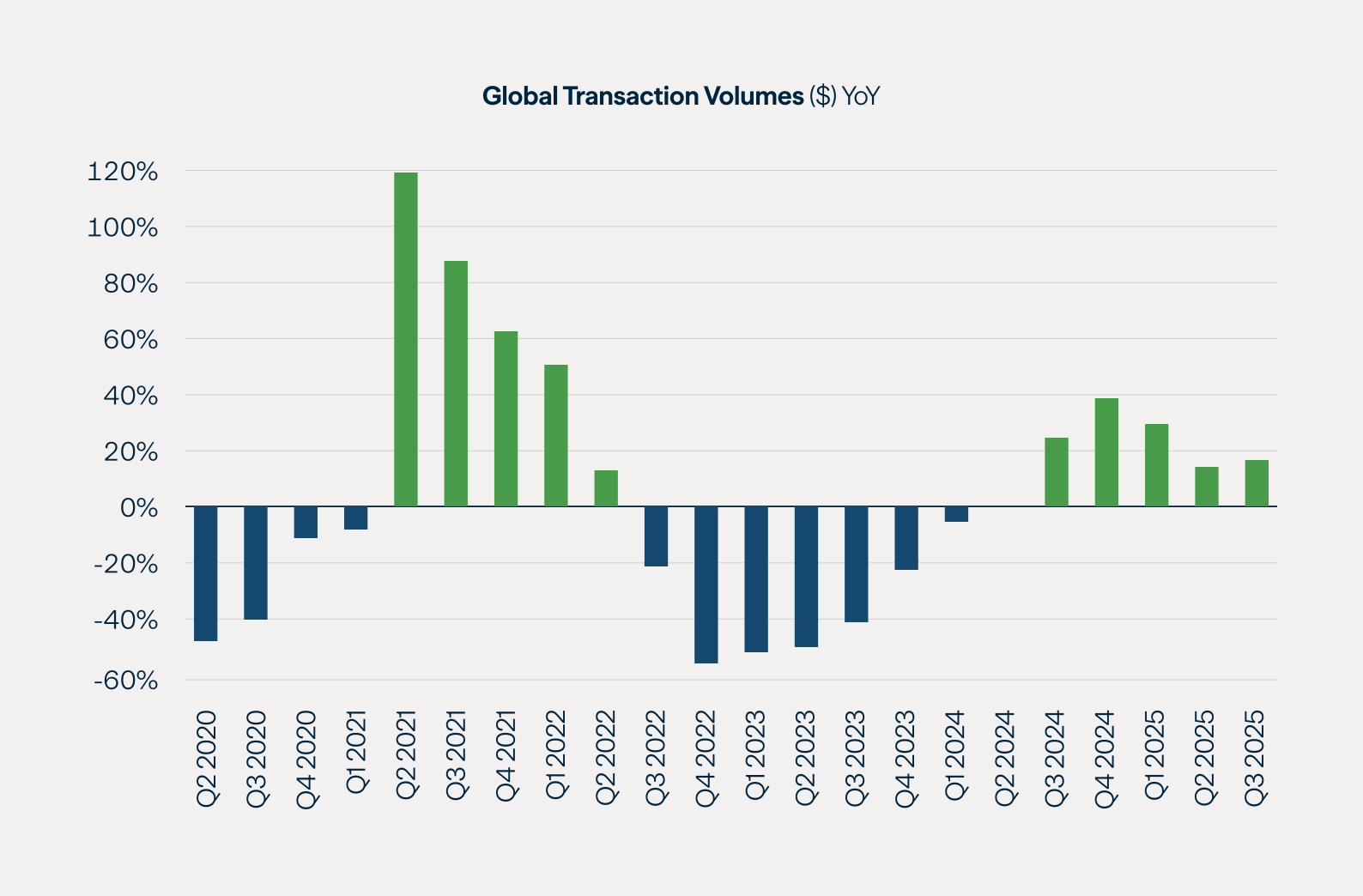
Figure 7: Deal Flow Rebounds
Source: JLL, November 2025. Data as of Q2 2025.
Housing
Housing represents one of the most compelling long-term investment themes we see around the world, with powerful demographic trends driving our investment focus.
In the U.S., demand is being shaped by millennials and baby boomers, who together account for a substantial share of the population (see Figure 8). For millennials, affordability remains a core challenge. Home prices have risen 87% since 2016, and elevated interest rates further limit ownership, fueling demand for rentals and affordable alternatives such as manufactured housing. Manufactured homes, which cost roughly 30% less to own than tradition- al single-family houses, have seen virtually no new supply in the past decade and continue to demonstrate strong NOI resilience and sticky occupancy.²⁴
At the other end of the spectrum, an aging population is driving a nationwide shortage in senior housing. More than 15 million baby boomers are expected to enter the 70–85 age group in the next five years alone. And supply is lagging after years of underdevelopment. By 2030, new inventory is expected to meet less than one-third of projected demand. Communities offering a full continuum of care, including independent living, assisted living and memory care, are particularly well positioned, though they require greater operational sophistication to support residents as their needs evolve. Managers with expertise and experience in complex operating models and improving resident experience will be best positioned to capture the wave of double-digit NOI growth predicted over the next several years.
In Europe, rental demand is rising as renting becomes a permanent lifestyle choice for many households. Since 2010, the growth rate of rent- al housing has outpaced home ownership by 20 percentage points, and the region’s housing stock is among the oldest and least institutionalized in the world.²⁵ In the U.K., more than 80% of homes are more than 50 years old, and only 2% of rentals are institutionally managed—compared with 41% in the U.S.²⁶
Meanwhile, housing supply is at record lows. Land scarcity, labor shortages, longer planning cycles and weaker project economics have driven a 70% drop in new housing starts in the U.K. since 2022.²⁷
Image
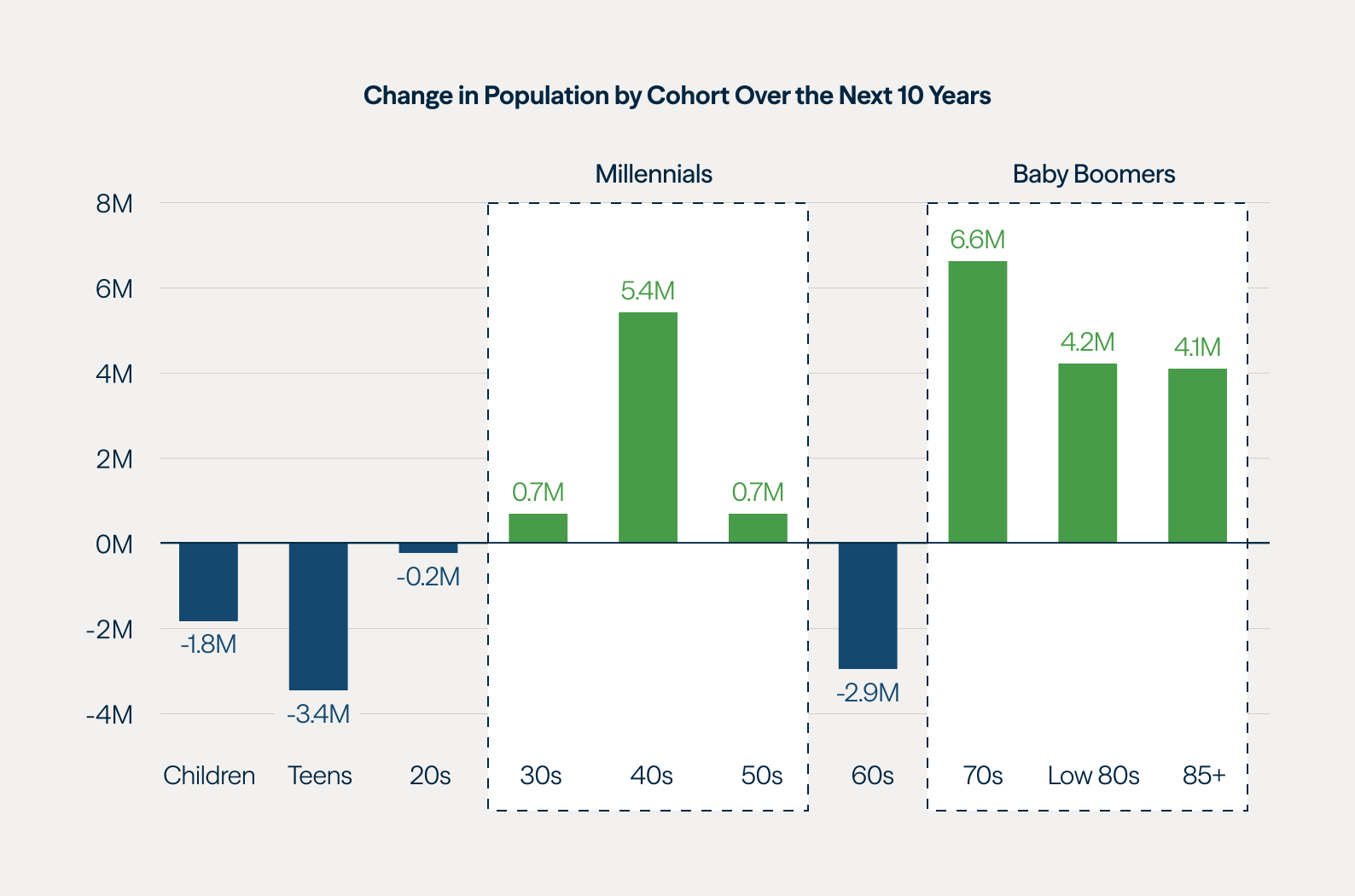
Figure 8: Generational Drivers Across America’s Housing
Source: John Burns, June 2025.
The same forces reshaping the global economy—technology, trade and power—are turning logistics and data centers into some of the most compelling real estate opportunities today.
Lowell Baron
CEO, Real Estate
These conditions create compelling opportunities to acquire, create and expand platforms, and institutionalize fragmented market segments across the housing spectrum.
Moving to the Asia-Pacific region, institutional rental housing is in the early stages across many countries. India stands out, with significant population growth and the projected migration of 350 million people to cities by 2050, one of the largest urban shifts in history.²⁸ As India’s working and middle class continues to grow and urbanize, there is a deep opportunity to provide institutional-quality rental housing in a country where roughly 70% of rental housing remains informally managed.²⁹
Logistics and Data Centers
The same forces reshaping the global economy— technology, trade and power—are turning logistics and data centers into some of the most compelling real estate opportunities today. Digital infrastructure demand is redefining land valuations.
Companies are rethinking where they manufacture, store and distribute goods in light of geopolitical volatility. Regionalization defines the landscape. We are seeing distinct trade clusters emerging across the Americas, Europe and Asia Pacific, with each developing its own ecosystem. Intra-Asia-Pacific trade has surged since 2019—with container volumes rising 13% in 2024 alone—as production and consumption grow more interconnected.³⁰ In some markets in the region, modernization is skipping legacy models altogether—adopting AI-driven fulfillment and multilevel distribution at scale.
In data centers, it’s no longer just about location— it’s about the ability to tap into affordable, sustainable power. Reliable energy access now determines where and how quickly new capacity can be built. We are also seeing industrial land intended for warehouses becoming data centers. There is increasing demand for converting high-quality industrial and business parks around the world into sites for AI factories, where development margins and land value upside are significantly greater. In a recent transaction, we sold a logistics parcel to a buyer seeking power access and land for their data center campus expansion, leading to a sale at pricing 1.5 times the logistics land valuation.
Experience, operating capabilities and relationships tie everything together. Partnerships with utilities secure grid access, and cooperation with governments helps unlock incentives and approvals. And long-term leases with top-quality clients create stable cash flows built on reliability, speed and trust. Logistics operators who deliver consistently for clients can become these companies’ partner of choice across markets.
Hospitality
Around the world, certain hospitality markets have evolved beyond post-pandemic recovery into a stage of sustained growth. Record tourism volume, coupled with limited new supply, is driving up RevPARs and supporting favorable dynamics.
Asia-Pacific hospitality represents a highlight within the sector. Japan, for example, has seen a fourfold increase in tourist arrivals over the past 15 years. Travel spending in the region as a whole is projected to grow at an 8.9% CAGR from 2025 to 2030, and yet Asia Pacific remains significantly undersupplied—hotel density relative to population remains far below that of the U.S.³¹
In Europe, luxury travel is accelerating, reinforcing pricing power for best-in-class assets. While the European hotel market is larger than the U.S. by room count, it remains highly fragmented, with low brand penetration and roughly 80% of assets in private hands.³² That creates opportunities for consolidation-led value creation. Moreover, liquidity constraints and rising construction costs have led many owners to defer refurbishments, resulting in a significant capex backlog of undercapitalized assets and creating compelling value-add entry points for investors.
In this environment, high-quality assets in markets with high barriers to entry and supply constraints will only become more valuable.
Open for Business
As we enter 2026, credit is flowing, liquidity is returning and investors are recalibrating strategies for a commercial real estate market that is increasingly open for business.
As a result, disciplined, selective investors are presented with opportunities to deploy capital into some of the best assets, businesses and management teams, in some of the most exciting geographies and sectors—opportunities that simply are not often available.
These assets benefit from experienced owner-operators who drive value creation through thoughtful, hands-on business plans. Deals are made at entry and measured at exit, but much of the value of a successful investment is earned during the hold period.
In other words, operations matter—especially as we enter the next phase of the real estate cycle.
Credit - Discipline is an all-weather strategy
Key Themes for 2026
- Private credit’s growth is accelerating in areas such as infrastructure, real estate and asset-based finance, as the asset class continues to mature.
- We see the potential for return dispersion to rise as investment results could increasingly depend on borrower, sector, collateral and structural differentiation.
- Disciplined underwriting focused on asset quality and credit fundamentals is essential in identifying attractive investment opportunities.
Heading into 2026, credit markets are demonstrating signs of both resilience and restraint. After several years of elevated base rates and tightening financial conditions, spreads across public and private credit are compressing. Yet credit fundamentals remain broadly sound, and continued investor appetite for private credit underscores confidence in the asset class and its role in diversified portfolios.
Navigating Market Noise
Credit remains attractive across liquid and private markets, but investors should continue to be discerning in the year ahead. In an environment where capital is plentiful and spreads have tightened, disciplined underwriting anchored in credit fundamentals and risk management is as important as ever. Despite recent headlines around isolated credit stress in private credit and loans on bank balance sheets, we do not see evidence of a systemic wave of defaults.
Nevertheless, these defaults serve as an important reminder that credit investors should be focused on downside mitigation and capital preservation. When liquidity is abundant, the discipline and skills of experienced investors become paramount in mitigating default risk.
At the same time, credit investors view periods of market volatility as windows of opportunity. They provide moments of repricing and dislocation, where disciplined capital can be deployed on favorable terms. Managers with dry powder and flexibility can position themselves to be a provider of stability—and liquidity—when others pull back.
Real estate credit markets are experiencing recent record liquidity and rising transaction volumes, with 2025 CMBS issuance on pace to exceed $120 billion, the highest since 2007.
Craig Noble
CEO, Credit
Real Estate Credit: Liquidity Unlocked
Current conditions create a favorable setup for higher-yield deployment. For example, real estate credit markets are experiencing recent record liquidity and rising transaction volumes, with 2025 CMBS issuance on pace to exceed $120 billion (see Figure 9), the highest since 2007. CMBS serves as a key barometer of private real estate credit, and today’s issuance momentum reflects renewed market depth. And, following a meaningful value reset, real estate equity valuations remain about 17% below prior peaks,³³ creating a tailwind for attractive valuations with a deeply insulated entry point into the capital stack for credit investors. In addition, roughly $1.9 trillion of loans will mature over the next two years, while 2025-originated loans are priced about 150 basis points higher than those maturing in that window.³⁴
Image
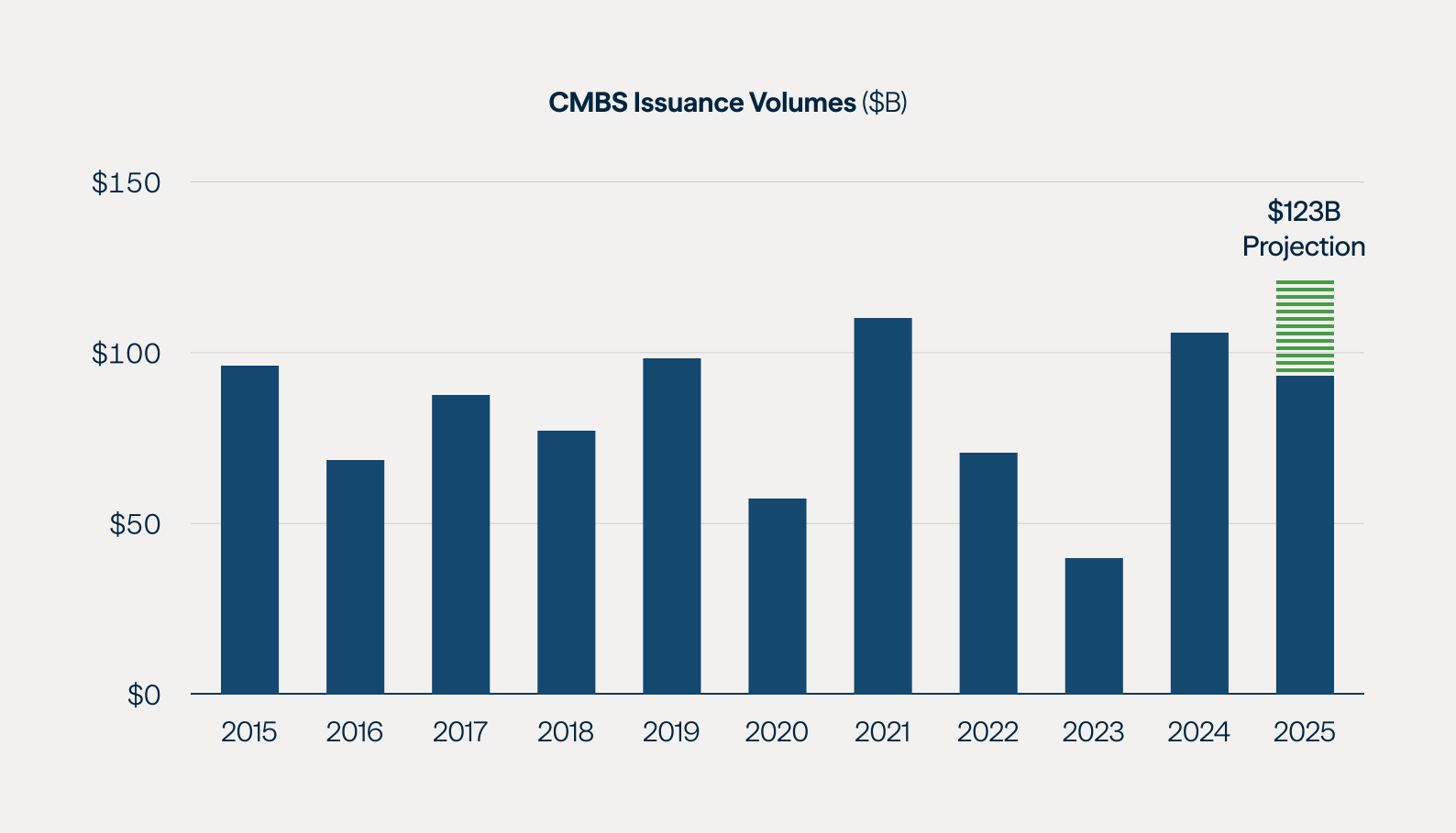
Figure 9: Real Estate Runs on Credit and Markets Are Experiencing Recent Record Liquidity
Source: Trepp, September 2025.
Amid this backdrop, alternative lenders and insurers are gaining share in the $8+ trillion commercial mortgage market. Meanwhile, bank loan originations are rising in comparison with a pullback witnessed in recent years, but banks’ focus has shifted to becoming larger providers of back leverage and working with private lenders through co-origination platforms, strategies that operate alongside and enhance the offerings of alternative lenders. With banks holding nearly twice the market share they do in the U.S., Europe offers compelling opportunities for alternative lenders as the market evolves, especially in the senior part of the capital stack.
Housing remains a high-conviction sector, sup- ported by deep structural undersupply with about four million homes needed in the U.S., and housing completions down 22% year-over-year.³⁵ Opportunities such as office-to-residential conversions and homebuilder financing directly address sustained demand, offering investors differentiated, high- yield exposure in select markets.
We also see selective tactical upside in the office sector, with values 40% below 2022 post-Covid peaks, prime assets commanding 15% premiums, and limited new supply, creating favorable dynamics for lenders seeking exposure to a sector with quickly improving fundamentals and attractive credit metrics. While real estate is a highly diverse sector that requires building-by-building and neighbor- hood-level diligence, today’s backdrop presents one of the most attractive environments in over a decade for disciplined real estate credit deployment.
Infrastructure Debt: Outsized Opportunities
The outlook for infrastructure remains strong. Lower borrowing costs are improving refinancing conditions and transaction activity. Moderate inflation also remains a tailwind for the sector. Because many infrastructure assets can pass through inflation in their pricing and maintain steady demand, they tend to preserve their real (inflation-adjusted) returns better than many other types of investments.
Infrastructure continues to demonstrate the defensive qualities of essential businesses with high barriers to entry and predictable cash flows with embedded inflation protections. These qualities naturally translate into low defaults and high recovery rates (see Figure 10). By focusing on proven operating assets with long-term contracted cash flows and avoiding areas such as untested technologies or large and complex construction risk, investors can preserve downside protection. Infrastructure private credit also provides effective portfolio diversification into essential non-cyclical sectors and is generally not well represented by public market high-yield issuances. In the current environment, infrastructure debt also offers compelling cash yields, providing resilient income and attractive risk-adjusted returns—an enduring advantage as markets navigate a shifting macro environment.
Image
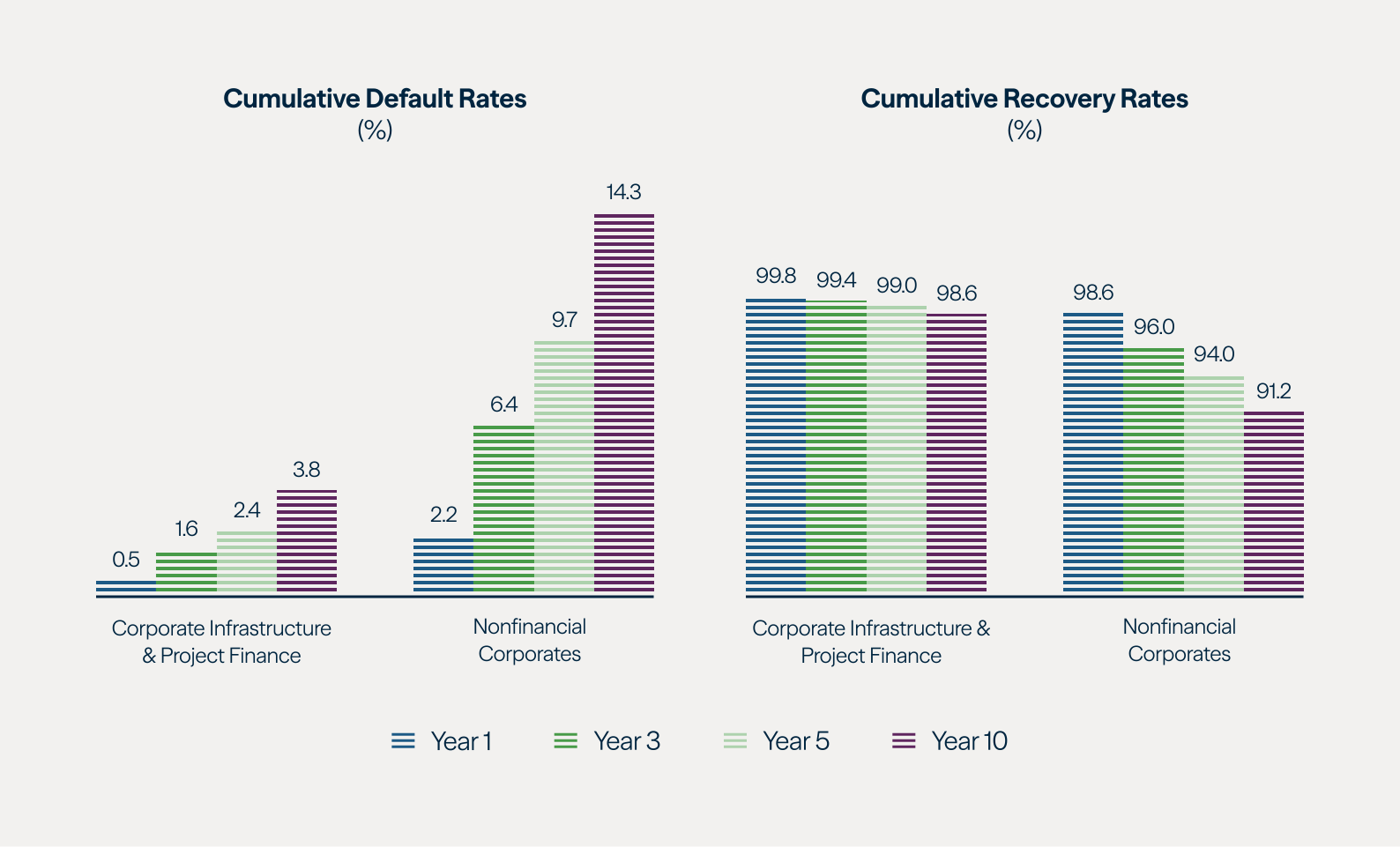
Figure 10: Strong Underlying Assets Can Result in Lower Defaults and Higher Recoveries
Source: Moody’s, “Infrastructure Default and Recovery Rates, 1983-2022.” Non-financial corporates represent loans to parent corporations, not supported by a specific collateral pool of assets.
Looking ahead, a defining growth driver will be the financing of digital and energy infrastructure, particularly AI-related data centers that are supported by strong counterparties and long-term contracts, and which require massive investments in power, cooling and compute capacity. With global AI infra- structure needs estimated to exceed $7 trillion over the next decade,³⁶ investors can capture durable, inflation-resilient yields through infrastructure debt.
Corporate Credit: Quality Over Quantity
Issuance in both leveraged finance and investment-grade markets has been driven by refinancings and repricings. Credit spreads across public and private markets remain near historical tights, relative to the last 15+ years, but the ~150 basis-point premium³⁷ on direct lending private debt remains accessible— underscoring ongoing investor demand for illiquidity compensation even as competition intensifies.
Default rates across direct lending and high yield were in line with historical averages in 2024 and 2025—well below global financial crisis and Covid peak default rates. In contrast, broadly syndicated loan defaults became elevated in that same period. While we still view direct lending as attractive on a relative basis, we are exercising significant caution in this environment with disciplined credit selection.
Our outlook for corporate credit is guided by a sharp- er distinction between sub-investment-grade direct lending and private investment-grade credit, with the latter offering particularly attractive risk-adjusted returns through exposure to credit-worthy high- grade borrowers seeking private market flexibility. We currently expect that capital to increasingly flow toward these higher credit-quality strategies as investors look to generate incremental spread while maintaining—or even improving—their risk profile.
Portfolios will likely exhibit stronger credit fundamentals, lower delinquency rates and healthier excess spread profiles.
Craig Noble
CEO, Credit
ABF: Positioning for What’s Next
The asset-based finance landscape is entering a period of renewed market focus that could unlock compelling opportunities. Within the consumer segment, tighter underwriting standards are expected as lenders respond to evolving credit conditions as well as investor and regulatory scrutiny. The resulting portfolios will likely exhibit stronger credit fundamentals, lower delinquency rates and healthier excess spread profiles. This environment favors platforms that emphasize disciplined, data-driven underwriting, deep fundamental analysis, rigorous servicing oversight and selective capital deployment into higher-quality assets.
At the same time, prospective easing in interest rates could catalyze renewed activity in mortgage markets. Lower borrowing costs will likely drive higher lending volumes and greater transaction velocity across housing markets. Strategic mortgage platforms with integrated verticals combining origination, securitization and asset management stand to benefit from operating leverage and diversified revenue streams. These end-to-end models can capture value across the mortgage lifecycle, from loan production to secondary market activities.
We remain focused on identifying attractive credit opportunities under all market conditions but are also cognizant that dislocations often create value-driven entry points for sophisticated asset man- agers. Firms with deep expertise in underwriting and asset selection are well equipped to identify sec- tor opportunities and pockets of asymmetric risk and reward.
Investing Discipline
In an environment of tighter credit spreads and pockets of macro uncertainty, discipline can serve as both a defensive posture and an advantage. Managers who stay the course—focusing on fundamental value, prudent underwriting and long- term alignment—can position themselves to deliver attractive risk-adjusted total returns compared with their peers.
Whether through real estate credit benefiting from an active market, infrastructure credit supported by long-term contracts, corporate lending to defensive businesses with strong fundamentals, or ABF that reaches into areas of the everyday economy, private credit is poised to grow as an integral part of a diversified portfolio. The key will be to remain selective and flexible in the year ahead.
Endnotes
1 McKinsey & Company, “The Infrastructure Moment,” September 2025.
2 IDC, "The Business Opportunity of AI," November 2023; Brookfield internal research.
3 Actual 2024 and forecasted 2025 annual capital expenditures for six hyperscale companies, based on publicly available disclosures; IoT Analytics, November 2025.
4 U.S. Department of Energy, “What does it take to modernize the U.S. electric grid?” October 2023; Lawrence Berkeley National Laboratory, “Queued Up: 2024 Edition,” April 2024.
5 IEA, "Electricity Grids and Secure Energy Transitions," October 2023.
6 IEA, “World Energy Investment 2025,” June 2025.
7 BloombergNEF, “AI and the Power Grid: Where the Rubber Meets the Road,” December 1, 2025.
8 S&P Global, "2025 Corporate Renewable Energy Update," February 2025.
9 BloombergNEF. Data shows net growth from 2024, not including legacy demand.
10 IEA, “Growth in global electricity demand is set to accelerate in the coming years as power-hungry sectors expand,” February 14, 2025; IEA, “World Energy Investment 2025,” June 5, 2025.
11 IEA, “Electricity Mid-Year Update 2025,” July 2025.
12 BloombergNEF.
13 Deloitte, “2026 Renewable Energy Industry Outlook,” October 2025.
14 World Nuclear News, “Trump sets out aim to quadruple US nuclear capacity,” May 24, 2025.
15 Entropy Inc. website, as of November 2025.
16 BloombergNEF, “Global Investment in the Energy Transition Exceeded $2 Trillion for the First Time in 2024,” January 30, 2025.
17 Bain & Company, “2025 Global Private Equity Report,” March 2025. Figures are rounded.
18 Bain & Company, “Leaning Into the Turbulence: Private Equity Midyear Report 2025,” June 2025.
19 Prior performance is not indicative of future results and there can be no guarantee that the funds, future funds or their respective investments will achieve comparable results or be able to avoid losses.
20 IDC, "The Business Opportunity of AI," November 2023.
21 Deloitte, “2026 Commercial Real Estate Outlook,” September 2025.
22 Trepp, October 2025.
23 Brookfield internal data, as of November 2025.
24 CoStar, 2024; Green Street, 2024 & 2025.
25 John Burns, 2025.
26 M&G Real Estate based on Eurostat, March 2025; Syswov, March 2025. Data based on 11 Continental European markets.
27 European Commission, EU Buildings Database, 2023.
28 Savills, Q2 2025; UBS, March 2025; British Property Federation, May 2025.
29 Global Change Data Lab, “Our World in Data,” 2024.
30 Alphaliner, “Notable Container Shipping News: September 2025,” October 7, 2025.
31 Statista, 2025; Euromonitor, 2024.
32 Savills, Q2 2025.
33 Greenstreet CPPI, October 2025.
34 S&P, September 2025.
35 Cushman & Wakefield, Q2 2025.
36 Brookfield internal research.
37 Pitchbook Leveraged Commentary and Data, September 2025.
Disclosures
This commentary and the information contained herein are for educational and informational purposes only and do not constitute, and should not be construed as, an offer to sell, a solicitation of an offer to buy, or an advertisement for, any securities, related financial instruments or investment advisory services. This commentary discusses broad market, industry or sector trends, or other general economic or market conditions. It is not intended to provide an overview of the terms applicable to any products sponsored by Brookfield Asset Management Ltd. and its affiliates (together, “Brookfield”).
This commentary contains information and views as of the date indicated and such information and views are subject to change without notice. Certain of the information provided herein has been prepared based on Brookfield’s internal research and certain information is based on various assumptions made by Brookfield, any of which may prove to be incorrect. Brookfield may have not verified (and disclaims any obligation to verify) the accuracy or completeness of any information included herein including information that has been provided by third parties and you cannot rely on Brookfield as having verified such information. The information provided herein reflects Brookfield’s perspectives and beliefs.
Certain information contained herein constitutes “forward-looking statements." Due to various risks and uncertainties, actual events or results may differ materially from those reflected or contemplated in such forward-looking statements. Although Brookfield believes that the anticipated future events or results expressed or implied by the forward-looking statements and information are based upon reasonable assumptions and expectations in light of the information presently available, the reader should not place undue reliance on forward-looking statements and information because they involve known and unknown risks, uncertainties and other factors which may cause the actual events or results to differ materially from anticipated future events or results expressed or implied by such forward-looking statements and information.
Investors should consult with their advisors prior to making an investment in any fund or program, including a Brookfield- sponsored fund or program.